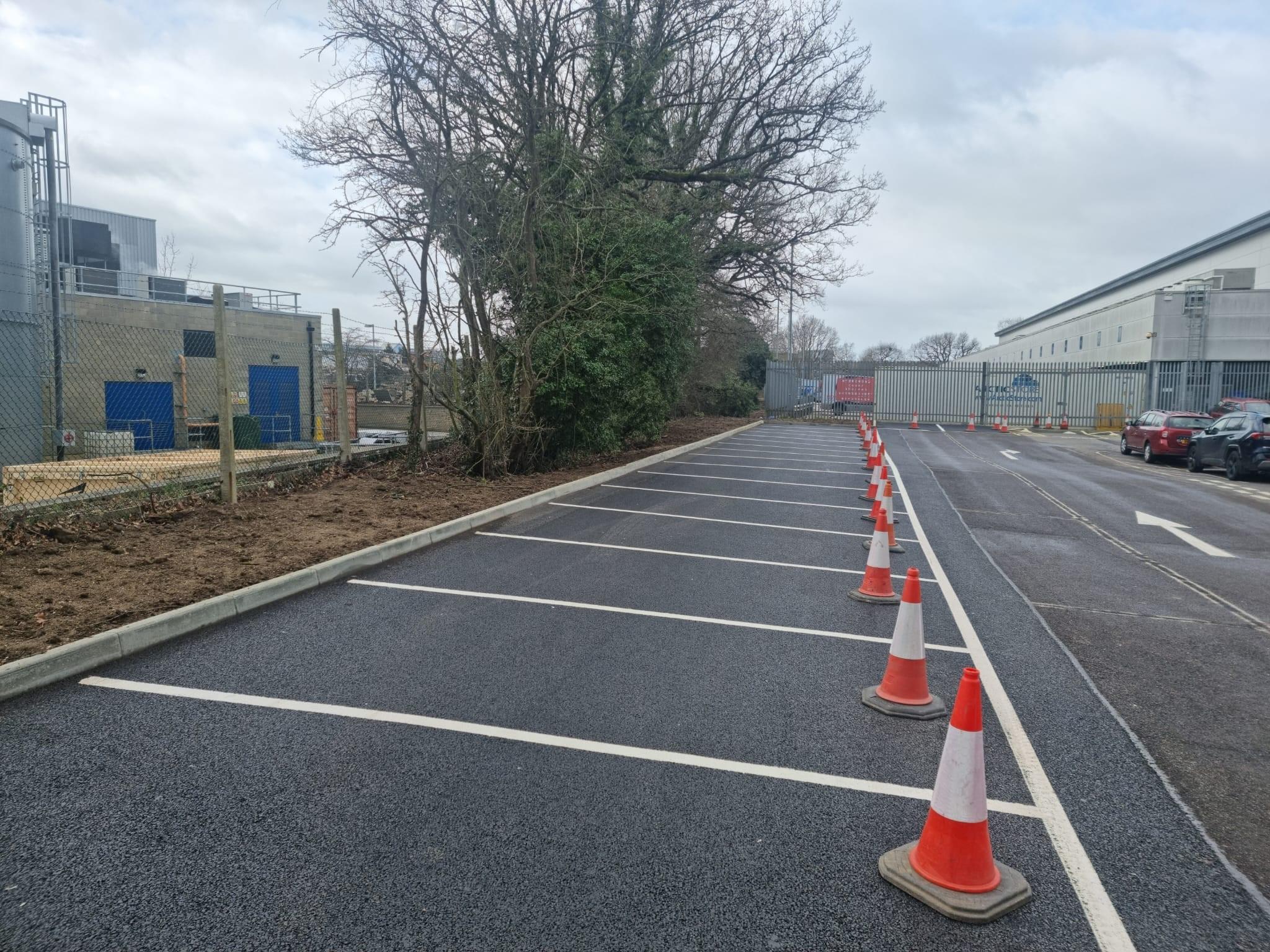
Birmingham & the Midlands
Car Park
Tarmac Surfacing
New car parks, full resurfacing and pothole repairs for retail, commercial, industrial and residential sites across Birmingham and the Midlands.
New car parks, full resurfacing and pothole repairs for retail, commercial, industrial and residential sites across Birmingham and the Midlands.
For any business, the car park is the first thing customers see when they arrive. A cracked, potholed or poorly maintained surface doesn't just look bad — it causes vehicle damage, creates trip hazards, and opens you up to liability claims. It also tells customers something about how you run your business.
At M Calladine Groundworks, we carry out car park surfacing from the ground up — new builds, full resurfacing, overlay work, pothole repairs and line marking. Every project is specified correctly for its traffic load and use, and every surface is laid to last.
We've surfaced car parks for retail units, supermarkets, industrial estates, office buildings, pubs, hotels, housing developments, schools and more. Whatever the size or complexity of your project, we have the experience and equipment to get it done properly.
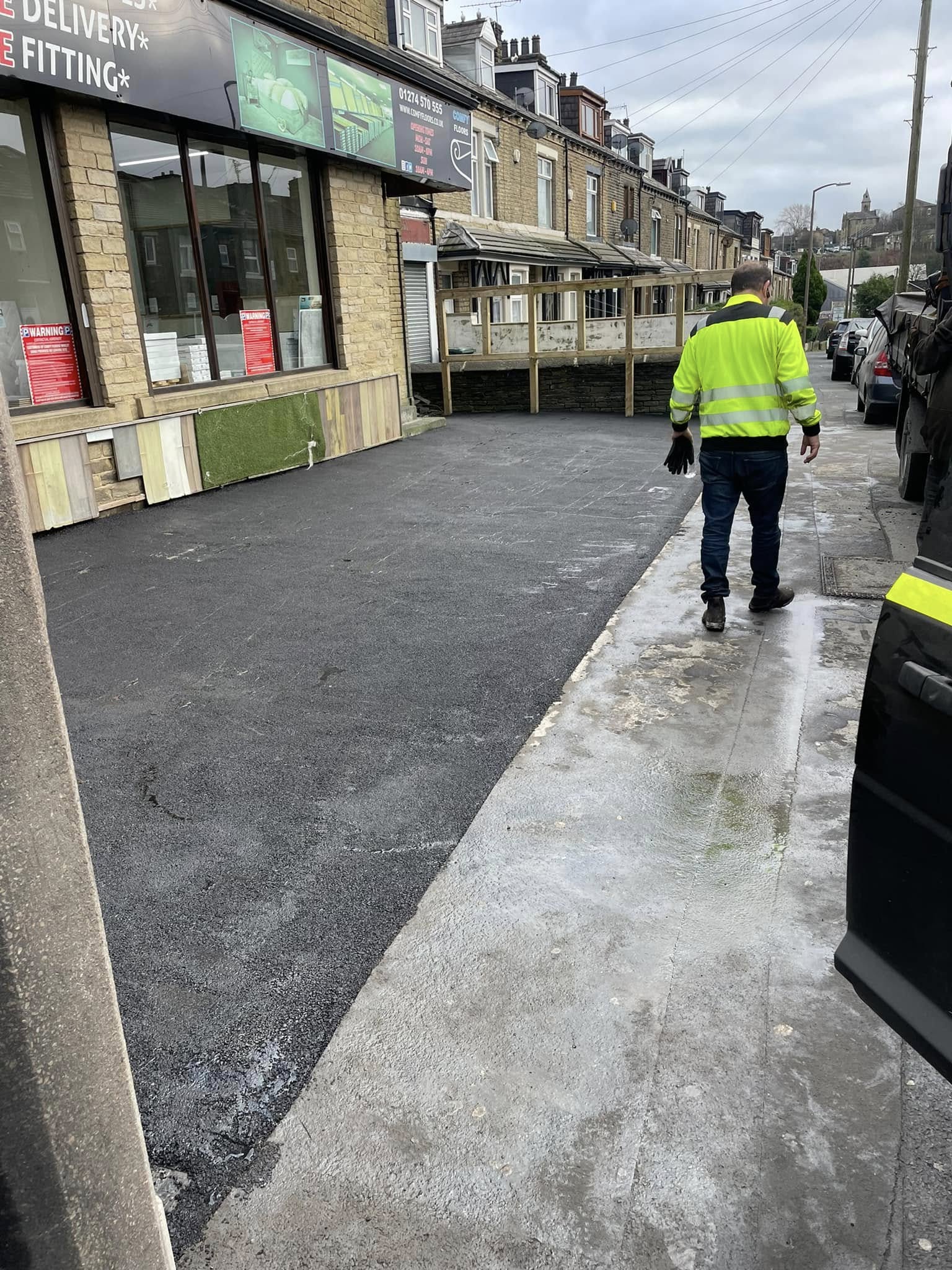
Building a new car park from scratch means getting the groundworks right before any tarmac goes down. We carry out the full project — from initial excavation through to the finished, line-marked surface.
The ground is excavated to the correct depth, any soft spots are treated, a geotextile membrane is laid, and then the sub-base is built up in compacted layers. Only once the foundation is solid do we lay the tarmac. This is the difference between a car park that lasts 25 years and one that starts failing in 3.
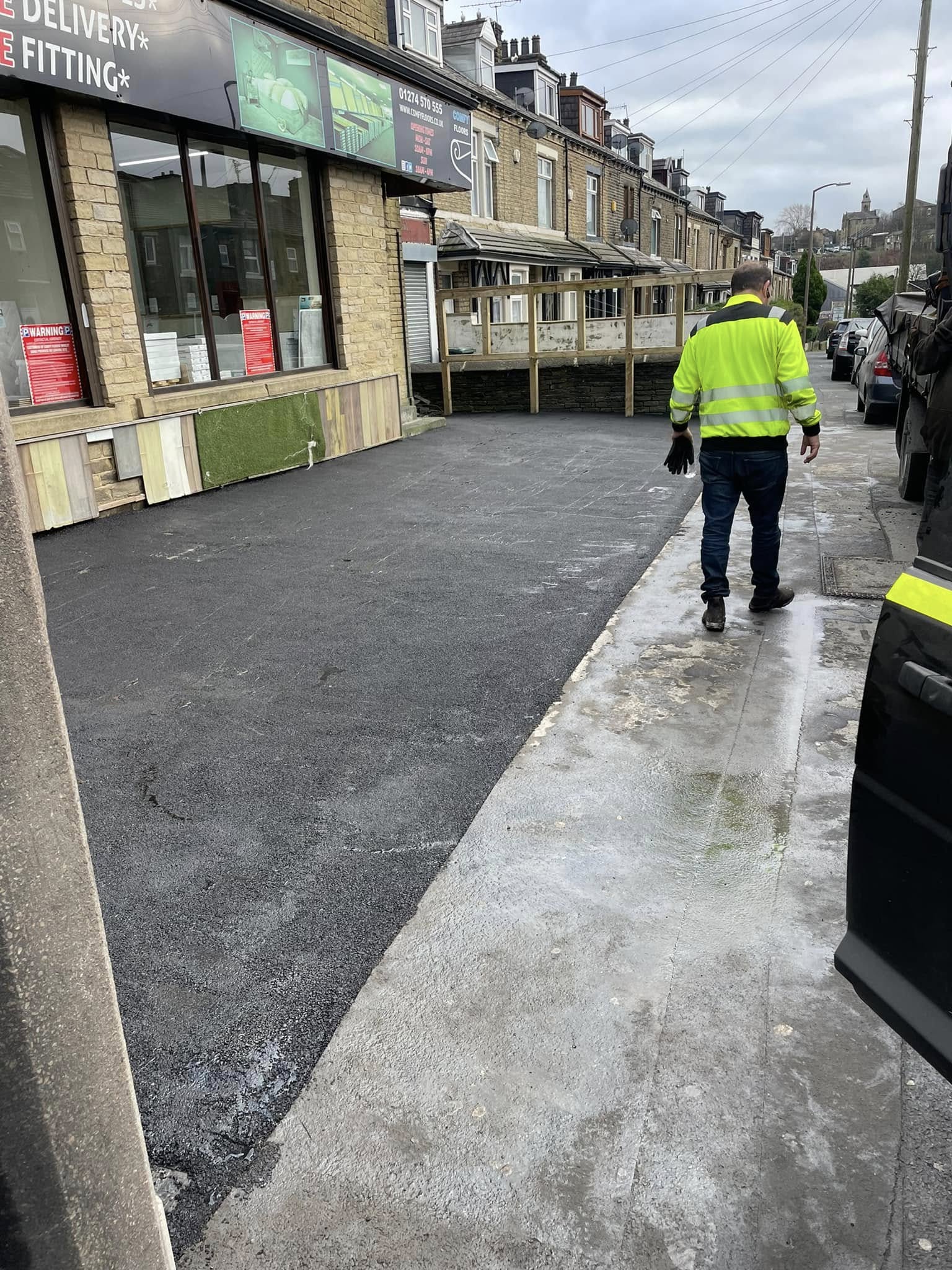
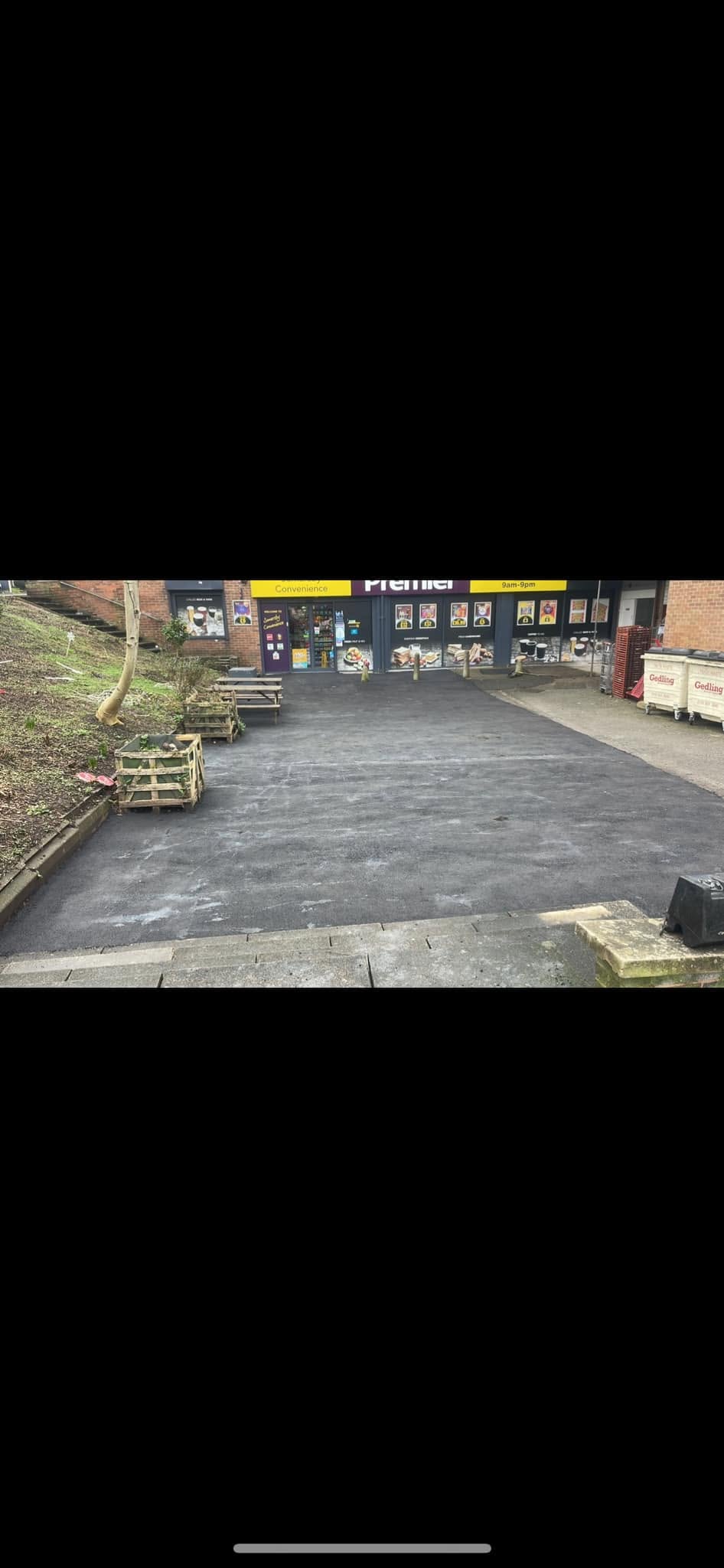
If your existing car park has reached the end of its life — widespread cracking, rutting, potholing, poor drainage or simply a surface that looks worn and tired — full resurfacing is often the most cost-effective solution.
Before we recommend full resurfacing, we always assess whether the sub-base is sound. If it is, we can plane off the existing wearing course and overlay with fresh tarmac — significantly cheaper than full reconstruction. If the sub-base has failed, we'll be honest with you about that and quote accordingly.
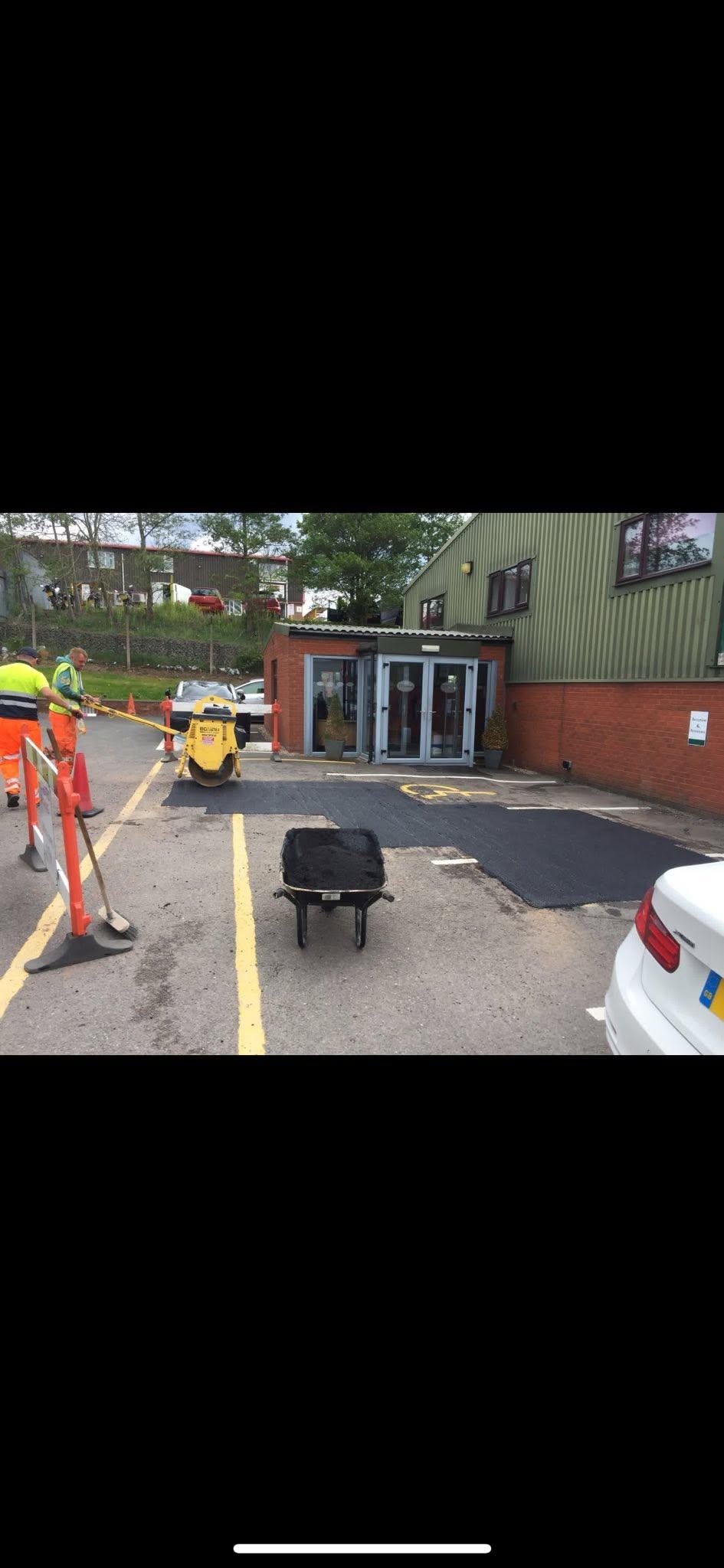
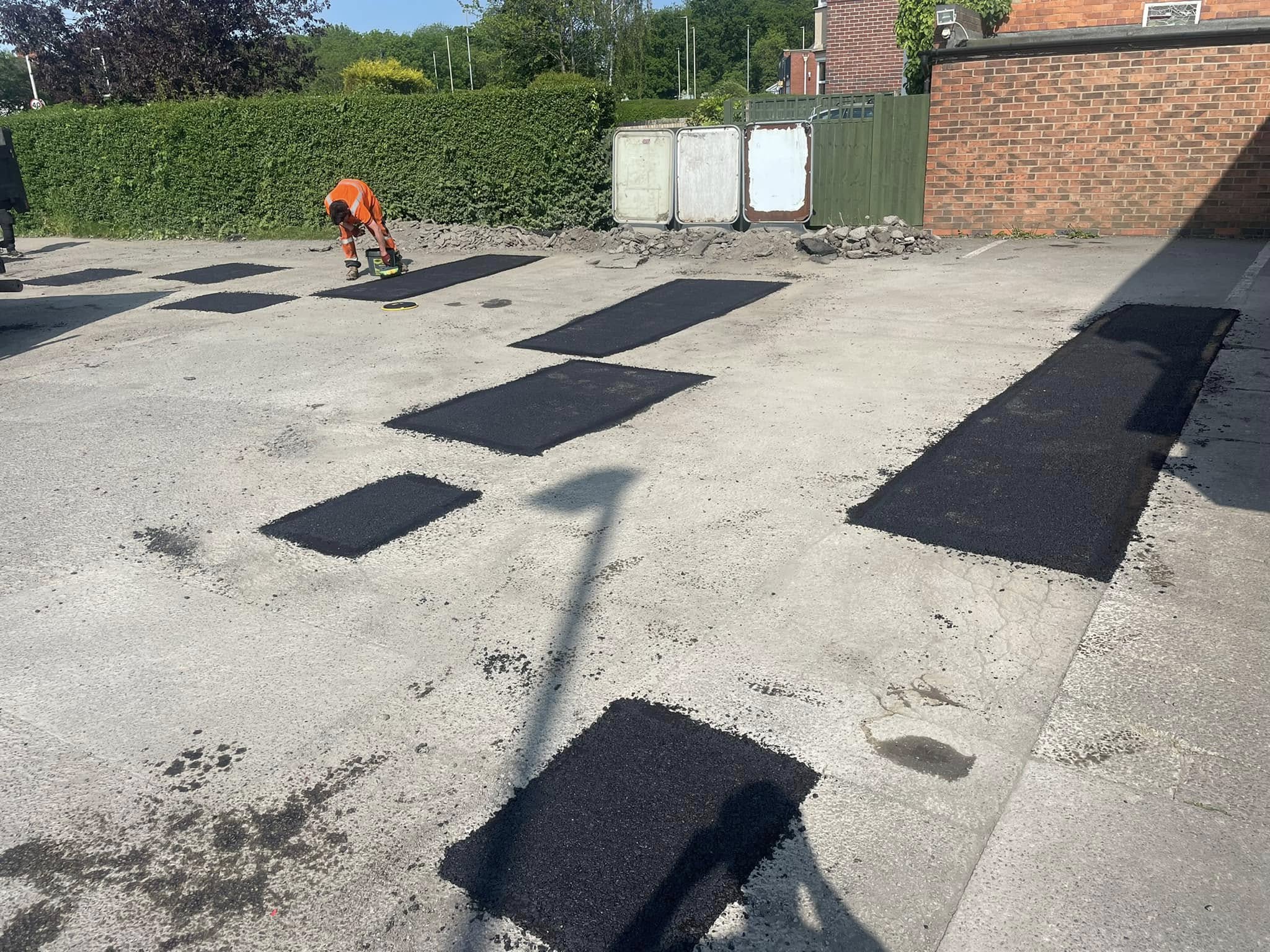
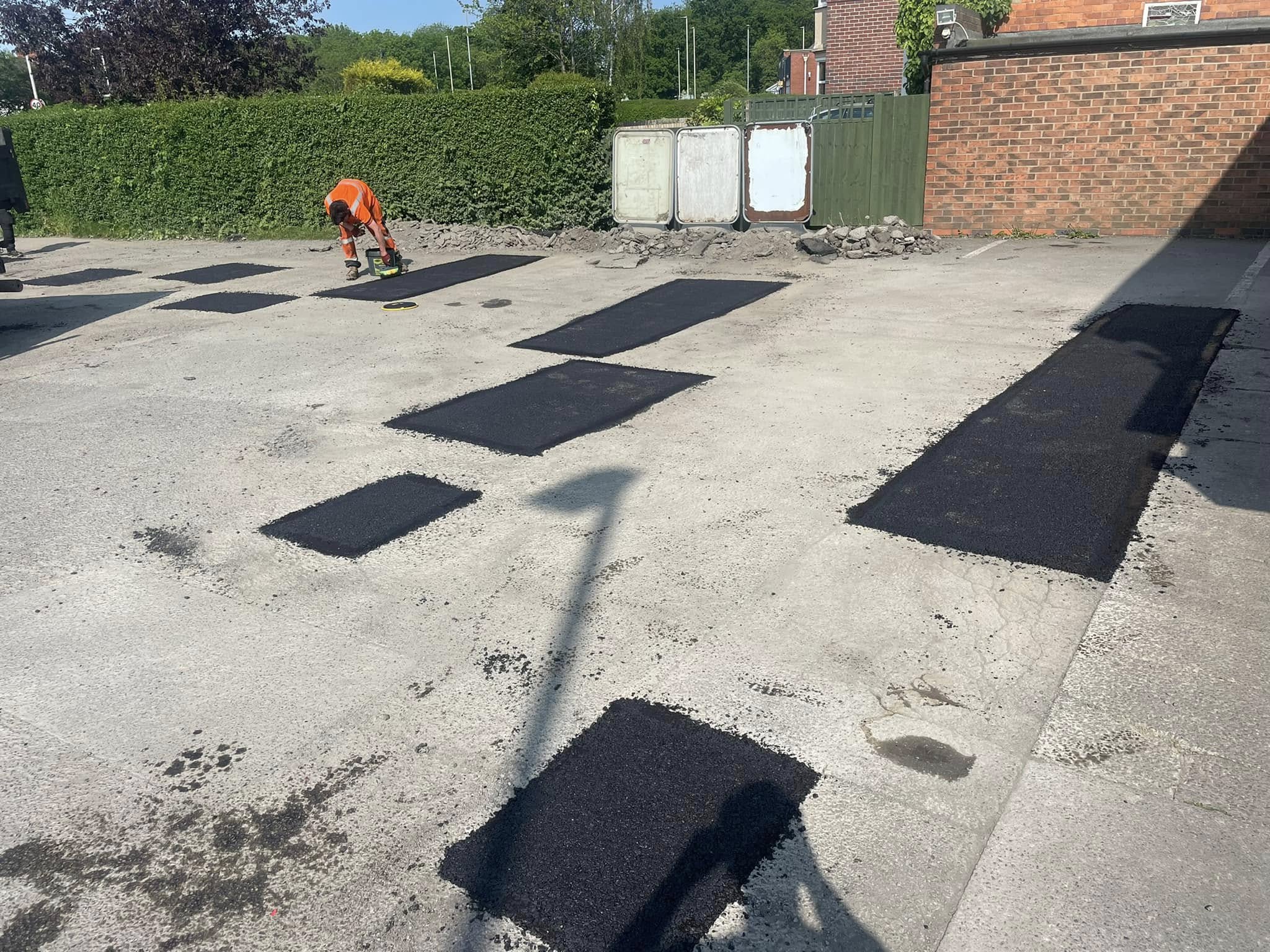
Not every car park needs full resurfacing. If the surface is generally sound but has isolated areas of damage — potholes, cracked sections, sunken patches or edge failure — targeted repairs and patching can extend the life of the surface by many years at a fraction of the cost of full resurfacing.
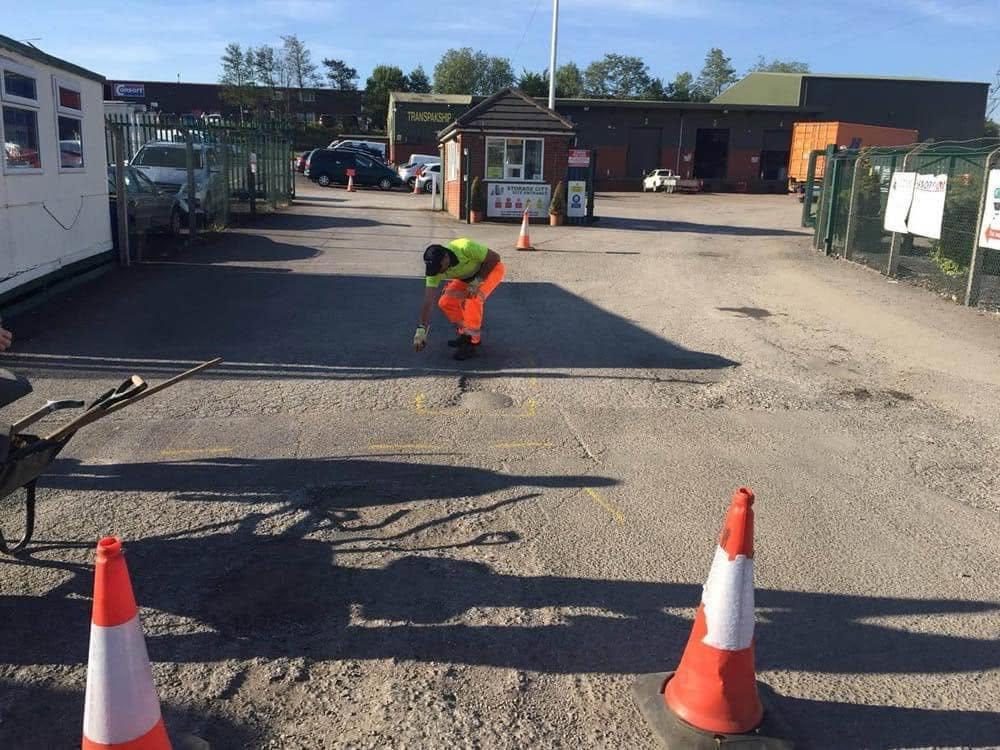
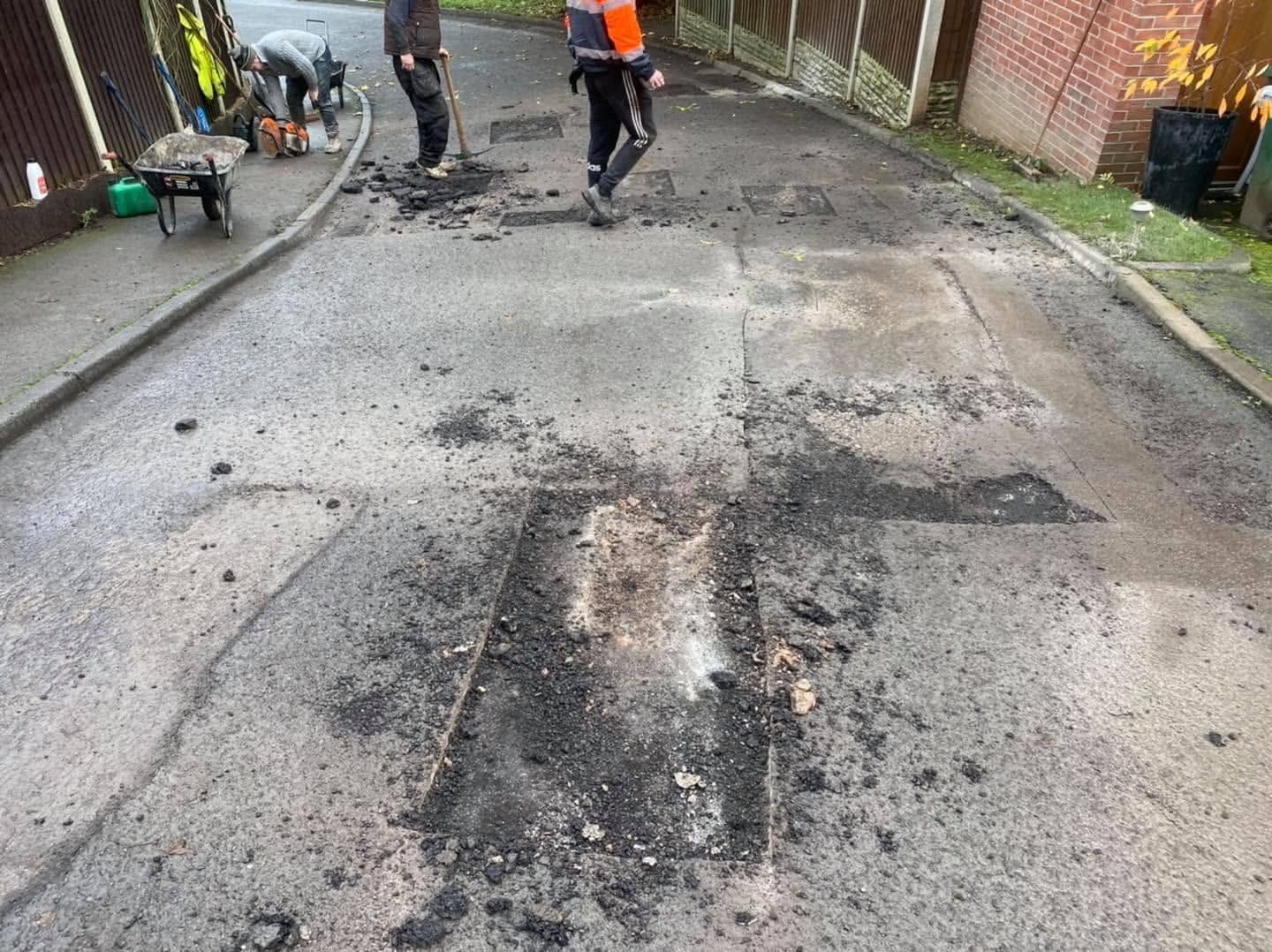
We carry out all car park repairs using proper cut-and-fill technique — not just throwing cold tarmac in a hole and hoping for the best. Every repair is cut square, primed and filled with quality tarmac, properly compacted to a flush finish.
Car parks on industrial estates, logistics sites and factory premises face very different loads to a retail or office car park. HGV movements, forklift traffic and heavy delivery vehicles place enormous stress on the surface and the sub-base beneath. Standard car park specifications simply aren't up to this kind of use.
We specify and construct industrial car parks and yard areas to handle the actual loads they'll face — with thicker sub-base, heavier tarmac layers and reinforced edges at vehicle entry and turning points.
The right specification depends on what your car park will be used for. Here's a guide to what we typically recommend for different types of car park — though every site is assessed individually during our free survey.
| Car Park Type | Sub-Base Depth | Binder Course | Wearing Course | Notes |
|---|---|---|---|---|
| Residential / Small PrivateDomestic driveways, small car parks | 100–150mm Type 1 | Not always required | 40mm 6mm DBM | Suitable for cars and light vans only. Edge restraint essential. |
| Retail / CommercialShops, offices, restaurants | 150–200mm Type 1 | 40–50mm DBM binder | 30–40mm 6mm or 10mm | Standard car and light van traffic. Disabled bays, line marking, drainage gullies included. |
| Industrial LightSmall industrial, trade counters | 200–250mm Type 1 | 60mm heavy-duty binder | 40mm 10mm DBM | For sites with regular van and small HGV movements. Reinforced edges at entry points. |
| Industrial HeavyLogistics, warehousing, manufacturing | 250–300mm Type 1 | 80–100mm heavy binder | 40–50mm 14mm DBM | For regular HGV, artic and heavy plant. May include concrete aprons at loading bays. |
| Multi-Storey / DeckSpecialist structural surface | Structural deck | Waterproof membrane | Mastic asphalt or specialist | Specialist product required. Waterproofing of structural deck is critical. |
| Permeable / SuDSWhere planning requires permeable surface | Open-graded sub-base | Permeable binder course | Porous asphalt 30–40mm | Allows water to drain through surface into sub-base. Required by planning in some situations. |
We visit your site, assess the existing surface and ground conditions, take measurements and discuss your requirements. We look at traffic volumes, vehicle types, drainage, access for machinery and any constraints. Our quote covers everything — no hidden extras.
For occupied car parks, we plan the work in phases to keep as much of the car park open as possible. We agree start dates, working hours and access arrangements with you before we start — and we stick to the programme.
We excavate to the correct depth and build up the sub-base in compacted layers. Any drainage, gullies or inspection covers are set correctly at this stage. The sub-base is checked for level and compaction before any tarmac is laid.
Perimeter kerbing and any internal kerbs are installed. Drainage gullies, manhole covers and inspection chambers are set to the correct finished level. Getting drainage right at this stage saves significant problems later.
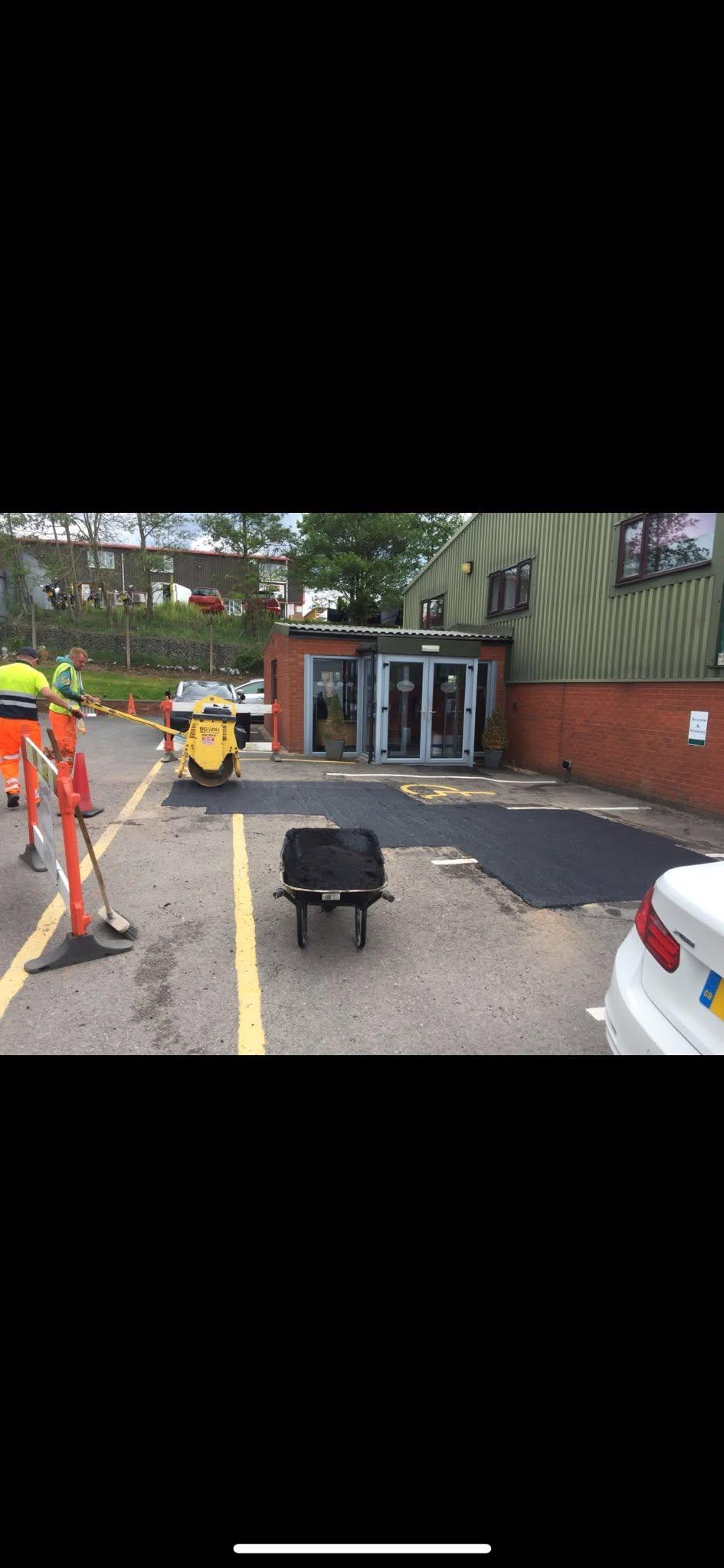
Binder course is laid and compacted, tack coat applied, then the wearing course is laid and rolled to a smooth, even finish. We check levels across the full surface to ensure correct falls for drainage. The finished surface is inspected before we move on.
Once the tarmac has cooled, we carry out all line marking — bays, disabled spaces, hatching, arrows, pedestrian crossings and any text. We walk the finished car park with you before we leave, and we're available if any issues arise after completion.
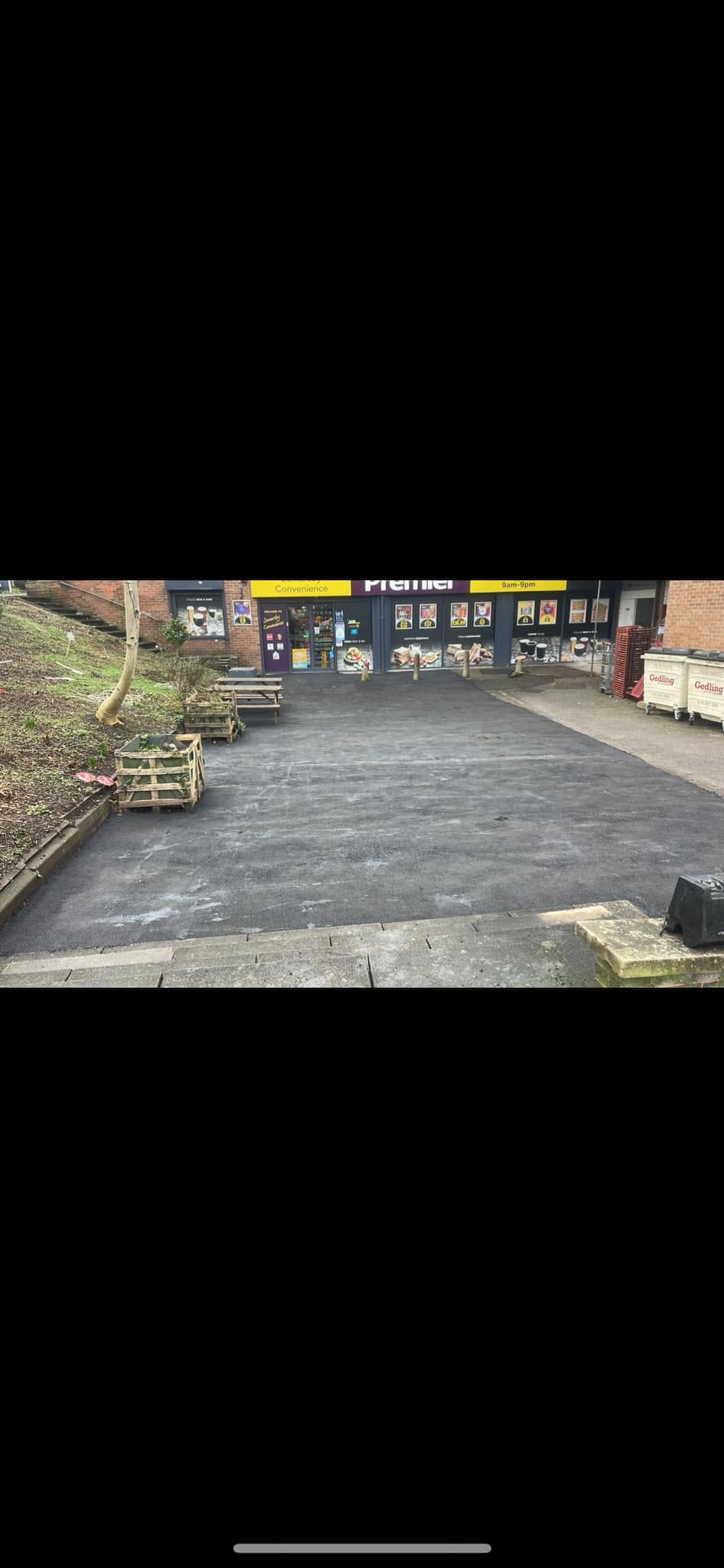
We're based in the Midlands and every job we take on is carried out by our own team. You deal with us directly — not a call centre or a subcontractor. Our reputation is built on word of mouth and repeat business, and we intend to keep it that way.
We won't underspecify a job to win it on price. Every car park we quote is specified for its actual use — the right sub-base depth, the right tarmac grade, the right drainage. A properly built car park costs more upfront but lasts twice as long.
We carry out the entire project ourselves — groundworks, drainage, kerbing, tarmac, line marking. No subcontractors, no passing the buck. One team, one point of contact, full accountability from start to finish.
All our work is fully insured and backed by our workmanship guarantee. We've been doing this for over 15 years and we stand behind every surface we lay. If there's ever a problem with our workmanship, we come back and fix it.
Most of our commercial clients can't afford to close their car park for a week. We plan phased working schedules that keep as much of your car park operational as possible throughout the project, and we work out of hours where needed.
Our quotes are detailed, clear and fixed. We explain exactly what we're doing, what materials we're using and why. No vague estimates, no unexpected extras. What we quote is what you pay — unless you ask us to change the scope.
Line marking is the finishing touch that transforms a freshly surfaced car park from a plain black surface into an organised, safe and professional space. We carry out all car park line marking as part of the same project — you don't need to find a separate contractor.
We use thermoplastic or road-quality paint for all markings, applied once the tarmac has fully cooled. Markings are laid out carefully before painting to ensure correct bay widths, straight lines and properly positioned disabled bays, and everything is checked against current guidelines before we leave site.
We can also install kerb-mounted wheel stops, bollards, signs and road studs as part of the same visit. Just let us know what you need when we carry out the initial survey.
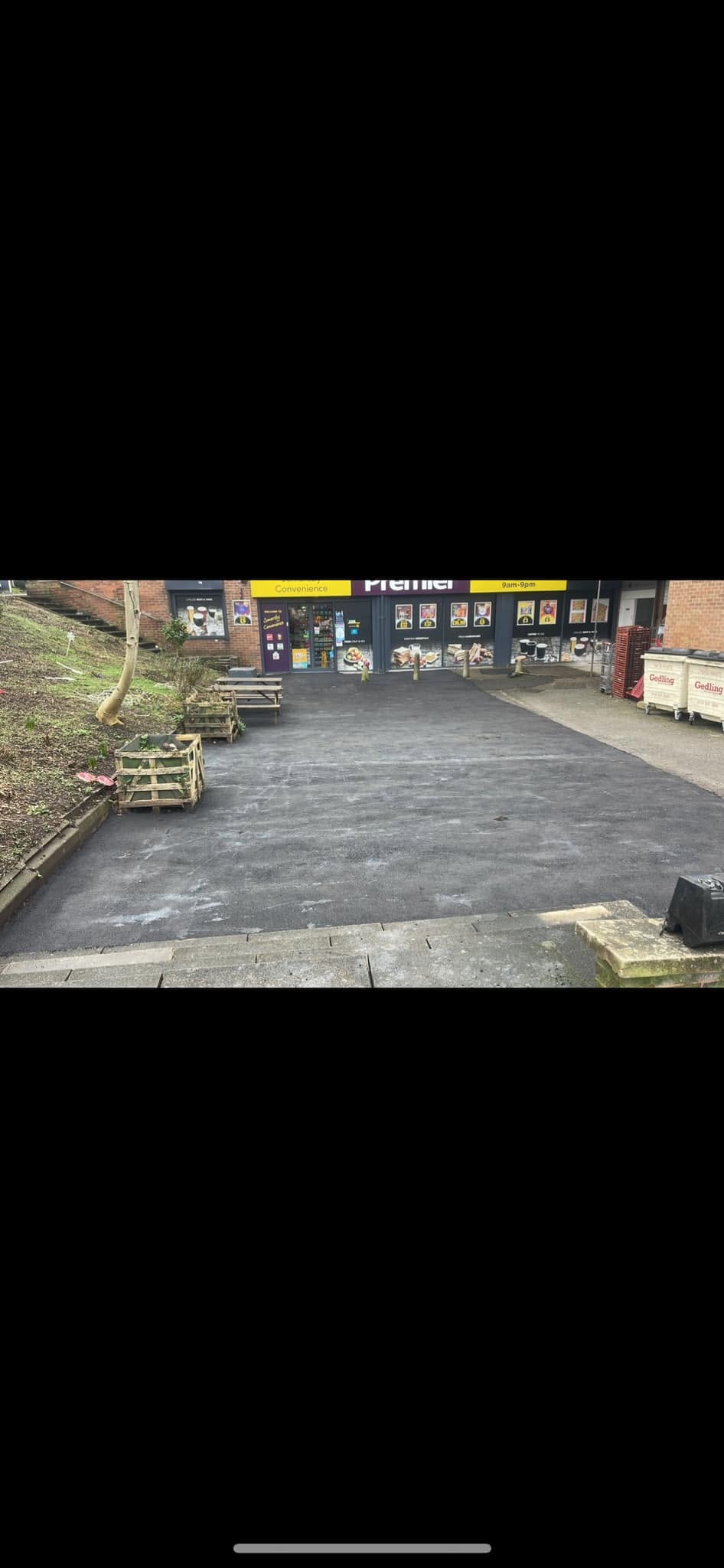
We carry out car park surfacing projects across Birmingham and the Midlandsing areas. Get in touch to discuss your project wherever you are in the region.
Free site visit & detailed quote — no obligation whatsoever.
Request a Free Quote 📞 01623 339827